
A single pass through the Visa Interview Simulator is a warm-up. Used properly, across the weeks before your appointment, it is a training loop. We ran the full F-1 track to test it: the verdict came back 25 of 30, INTERVIEW-READY, with study plan, funding, home ties and consistency all at 6 of 6, and answer quality at 1 of 6, because two answers rambled. That one weak dimension is exactly where these six habits aim:
1. Take a baseline a month out
Run the full ten questions cold and save the verdict. Ours named the same two questions the rubric kept circling: the average-marks pressure question and the closing anything-else question. Your baseline names yours. Everything after this is fixing those, which is a much shorter list than "prepare for the interview".
2. Drill your two weakest questions, not all ten
The verdict quotes your exact answers back. The marks question drew this officer lens: the answer rambled and blamed the teachers, and long defensive answers read as panic. The fix the simulator prints is worth stealing for any pressure question: cause, evidence, close, one sentence each, and if the answer needs a fourth sentence, cut the second one.
3. Rehearse the closing like it is scored, because it is
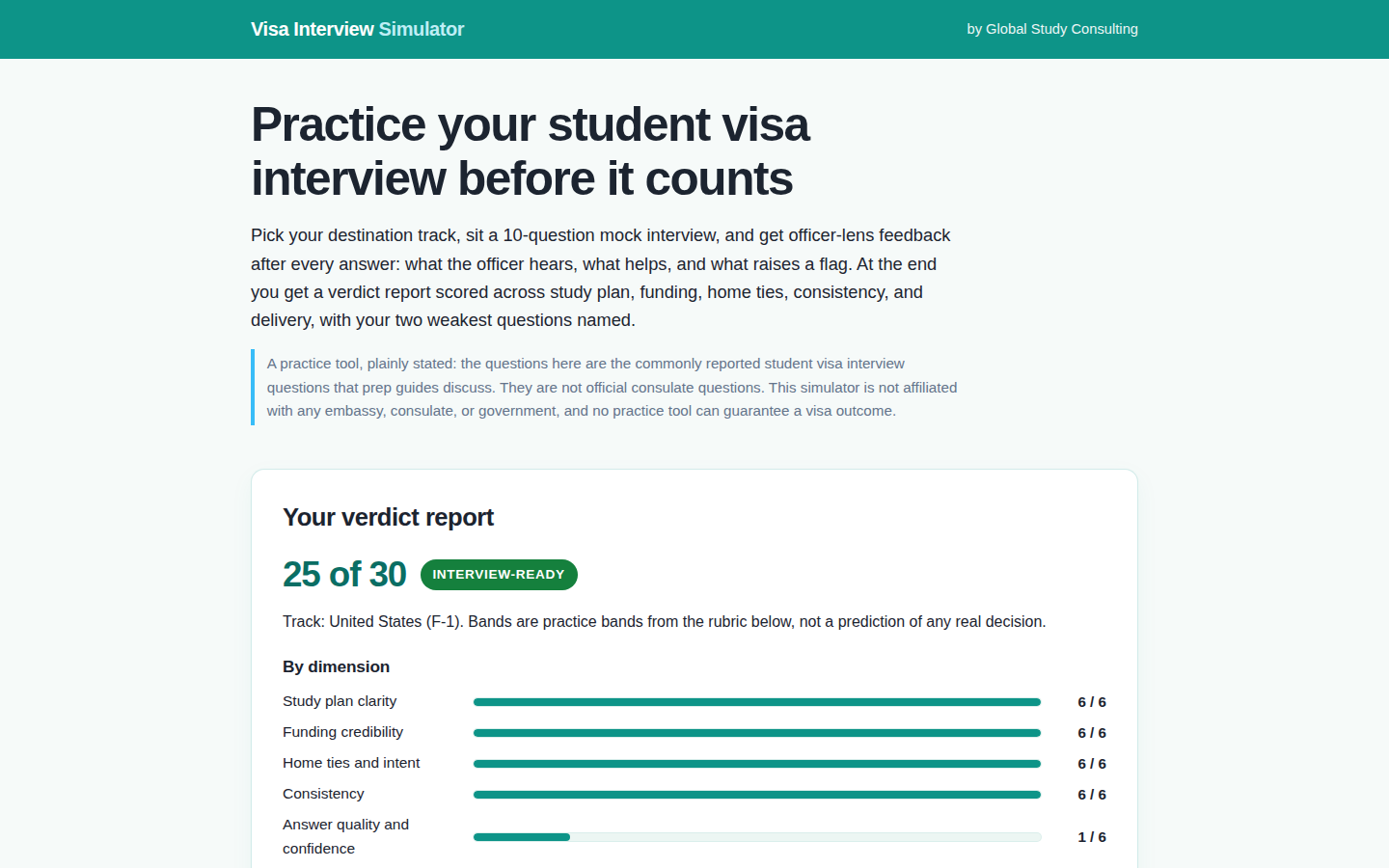
"Is there anything else you want to tell me?" sounds like a goodbye. In the run, a closing that re-listed everything (the dream since childhood, the famous university, the definite return) scored as the second weakest answer. One new fact or one quiet sentence beats a summary of the whole interview. Decide yours in advance.
4. Make the funding numbers boring
Funding credibility scored full marks when the answer carried plain figures: who sponsors you, what they do, tuition of about 28,000 dollars a year, the first-year total with living costs. No story, just numbers that match your documents. Our F-1 processing and fees guide has the official figures to anchor yours.
5. Keep one story across study plan, ties and return
Questions 5 to 7 are a consistency trap: plans after study, why the course is not available at home, how it connects to your degree. In the run, each answer extended the same thread, a field, a gap at home, a family firm working in it, and consistency scored 6 of 6. Pick your thread and never contradict it. The mock interview apps comparison shows how other tools test the same chain.
6. Practice the refusal answer before you need it
"If your visa is refused today, what will you do?" The answer that scored reads the refusal reason, fixes the gap it points to, and reapplies with better evidence. Calm, specific, no drama. And if your route has no interview at all, Canada and Australia permits are mostly paper-assessed, the visa rules themselves are the prep: the Can I Go? Checker at VisaDocs checks the entry side, and our own simulator spotting guide explains what separates a real simulator from a quiz. Run your baseline tonight: open the Visa Interview Simulator.